
Residential Chimney Leak Repair & Waterproofing
Leaky Roof or Leaky Chimney? How to Tell the Difference and Fix Chimney Leaks
Water stains near your fireplace, damp walls, musty odors, or dripping sounds after a storm can be frustrating because the source is not always obvious. Many homeowners assume they have a roof leak, but the real problem may be the chimney, flashing, crown, cap, chase cover, or masonry.
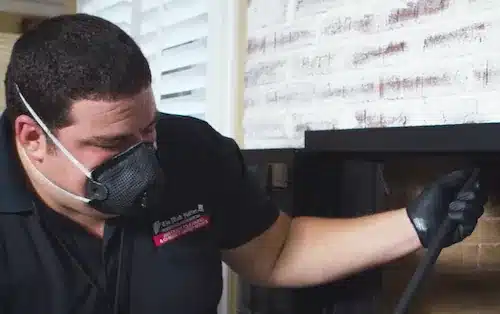
Chimney leaks are often mistaken for roof leaks because both can show up as water stains around ceilings, walls, attics, or fireplaces.
This guide explains how to tell whether water is entering from your roof or your chimney, the most common causes of chimney leaks, and how professional chimney leak repair differs for masonry chimneys and prefabricated fireplace systems.
Quick Answer: Is It a Roof Leak or Chimney Leak?
If water appears near the fireplace, chimney breast, ceiling around the chimney, attic framing near the chimney, or inside the firebox, the chimney system should be inspected. Roof leaks and chimney leaks often look similar, but chimney leaks commonly come from damaged flashing, cracked crowns, missing caps, deteriorated masonry, failed sealants, or rusted prefab chimney components.
Why Chimney Leaks Are Often Mistaken for Roof Leaks
Your chimney passes through the roof, which makes it one of the most common places for water intrusion. When water enters around that area, it may show up as a ceiling stain, attic moisture, damaged drywall, peeling paint, musty odors, or water inside the fireplace. Because the symptoms appear near the roofline, many homeowners assume the roof is the problem.
In many cases, however, the roof shingles are not the main issue. The leak may be coming from the chimney flashing, masonry, crown, cap, chase cover, storm collar, or vent pipe. A proper inspection helps determine whether the water is entering through the roof surface or through the chimney system itself.
Signs You May Have a Chimney Leak
- Water stains on the ceiling or wall near the chimney
- Moisture, dripping, or puddling inside the fireplace
- Musty odors coming from the fireplace
- White staining on exterior brick, known as efflorescence
- Cracked or deteriorated chimney crown
- Rust on the damper, firebox, chase cover, or chimney cap
- Peeling paint or bubbling drywall near the fireplace
- Loose mortar, spalling brick, or visible masonry deterioration
- Water damage in the attic around the chimney area
Common Causes of Chimney Leaks
1. Damaged or Improper Chimney Flashing
Flashing is the metal system that seals the area where the chimney meets the roof. If flashing is loose, rusted, poorly installed, or separated from the chimney, rainwater can enter around the chimney and travel into the attic, ceiling, or walls.
2. Cracked Chimney Crown
On a masonry chimney, the crown is the concrete or mortar wash at the top of the chimney. Its job is to shed water away from the flue and brickwork. Cracks in the crown can allow water to enter the chimney structure and cause additional masonry damage over time.
3. Missing or Damaged Chimney Cap
A chimney cap helps keep rain, leaves, animals, and debris out of the flue. Without a proper cap, water can fall directly into the chimney and fireplace system.
4. Porous Brick and Deteriorated Mortar
Brick and mortar naturally absorb moisture. Over time, exposure to rain, sun, wind, and temperature changes can cause masonry to deteriorate. Water may soak into the chimney and eventually appear inside the home.
5. Rusted Prefab Chimney Chase Cover
Prefabricated fireplace systems often have a metal chase cover at the top of the chimney chase. If the chase cover rusts, sags, separates, or was improperly installed, water can enter the chase and damage the fireplace system below.
6. Failed Storm Collar or Pipe Seal
On prefab systems, water can enter around the pipe if the storm collar or sealant has failed. This may cause rust, stains, or water dripping into the firebox.
Masonry Chimney vs. Prefab Fireplace Leak Repair
Not all chimney leaks are repaired the same way. Masonry chimneys and prefabricated fireplace systems are built differently, leak differently, and require different repair solutions.
Masonry Chimney Leak Repairs
Masonry chimneys are built with brick, mortar, concrete crowns, clay flue liners, flashing, and chimney caps. Leaks often develop when masonry absorbs water, the crown cracks, mortar joints deteriorate, flashing fails, or the chimney cap is missing or damaged.
Common masonry chimney leak repairs include:
- Chimney crown repair or crown replacement
- Chimney cap installation or replacement
- Flashing repair or replacement
- Tuckpointing damaged mortar joints
- Brick repair or replacement
- Chimney waterproofing
- Smoke chamber or flue-related repairs when needed
Prefabricated Fireplace and Chimney Leak Repairs
Prefabricated fireplace systems are factory-built units installed with metal chimney pipe and often enclosed inside a framed chimney chase. These systems do not have the same brick-and-mortar structure as a masonry chimney, so leak repair usually focuses on metal components, chase covers, pipe penetrations, and proper water shedding.
Common prefab chimney leak repairs include:
- Chase cover replacement
- Storm collar repair or replacement
- Chimney cap replacement
- Pipe flashing or seal repair
- Rust-damaged component replacement
- Inspection of the fireplace box, pipe, and chase interior
How Professionals Find the Source of a Chimney Leak
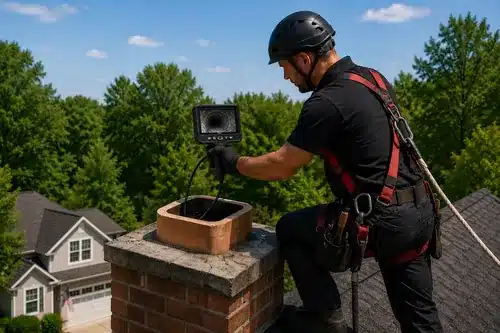
A chimney leak inspection may include checking the roofline, flashing, chimney crown, cap, chase cover, brick, mortar joints, attic, firebox, damper, and visible interior staining. The goal is to determine where water is entering and whether the source is the roof, the chimney, or both.
This matters because simply sealing one visible crack may not solve the problem. Water can travel behind walls, under shingles, through porous brick, or down inside the chimney system before showing up in a different location.
Should You Waterproof a Chimney?
Chimney waterproofing can help protect masonry chimneys from water absorption while still allowing the brick to breathe. This is different from ordinary paint or sealant, which can trap moisture and cause further deterioration. Waterproofing is often recommended after masonry repairs are completed and the chimney is in suitable condition.
Waterproofing is generally used for masonry chimneys, not as a blanket solution for prefab systems. Prefab leak prevention usually depends on proper chase covers, caps, storm collars, and metal component repairs.
Can You Fix a Chimney Leak Yourself?
Some homeowners try to patch chimney leaks with caulk, tar, or roof sealant. These temporary fixes often fail because they do not address the actual source of the leak. They can also make future repairs more difficult if the wrong material is applied to masonry, flashing, or metal components.
Because chimneys involve roof work, firebox components, flue systems, moisture control, and structural materials, a professional inspection is the best way to identify the cause and recommend the proper repair.
Chimney Leak Problems We Help Solve
Homeowners often describe chimney leaks by what they see inside the home. These common symptoms can point to problems with flashing, masonry, chimney caps, crowns, chase covers, or waterproofing.
|
|
Frequently Asked Questions About Chimney Leaks
How do I know if my roof is leaking or my chimney is leaking?
If the water appears around the chimney, fireplace, attic framing near the chimney, or ceiling near the chimney chase, you should have both the roofline and chimney system inspected. Chimney flashing, caps, crowns, masonry, and prefab chase covers are common leak sources.
Can rain come straight down my chimney?
Yes. If your chimney cap is missing, damaged, or improperly fitted, rain can enter directly through the flue opening.
Why does my fireplace smell musty after rain?
A musty fireplace odor after rain may indicate moisture inside the chimney system, water-damaged masonry, trapped debris, or poor airflow.
Is chimney waterproofing worth it?
For many masonry chimneys, waterproofing can help reduce water absorption and extend the life of the chimney when applied after necessary repairs are completed.
Do prefab chimneys leak differently than masonry chimneys?
Yes. Prefab systems often leak through rusted chase covers, failed storm collars, pipe penetrations, or metal chimney caps. Masonry chimneys often leak through crowns, flashing, mortar joints, brick, or missing caps.
Related Chimney, Fireplace & Home Services
Whether your chimney needs leak repair, cleaning, inspection, waterproofing, or a complete restoration, The Mad Hatter offers comprehensive fireplace, chimney, air quality, and outdoor living services for Metro Atlanta homeowners.
Schedule a Chimney Leak Inspection
If you are seeing water stains, fireplace moisture, rust, musty odors, or visible chimney damage, do not wait for the next storm to make the problem worse. The Mad Hatter helps homeowners identify chimney leaks and recommend the right repair for masonry and prefabricated chimney systems.
Need Help Finding a Chimney Leak?
Schedule a professional chimney leak inspection with The Mad Hatter today.
Schedule Chimney Leak Service